
Searching Madison County Civil Dockets
Missouri Case.net is the statewide public starting point for any Madison County civil matter. Got a case number from a pleading, notice, or judgment? Search by that first. When no number is handy, a litigant-name search can surface candidates. But confirm the Madison County court, division, case type, filing date, and case number before trusting a match. The Madison County Circuit Clerk maintains the court docket. The clerk is also the public route into the case file for the Circuit Court of Madison County, Missouri. An online result may be enough to locate the case. Want a Madison County docket printout, a specific public filing, or a certified judgment? Ask the Circuit Clerk what is available and which form of copy you need.
- Use Case Number Search first when the Madison County court identifier is known.
- Use Litigant Name Search only to locate possible public cases, then compare the Madison County header details.
- Read the Madison County docket from the petition or complaint forward through service, response, settings, and later orders.
- Open a linked filing or order when it is publicly available; an unlinked entry is not proof that the filing does not exist.
- Request the specific Madison County docket sheet, pleading, order, judgment, or certified copy from the Circuit Clerk when the online record is not enough.
Missouri's public search tools split filing-date searches from scheduled-hearing searches. A filing-date search narrows a matter to a short window. A scheduled event, meanwhile, should be checked against the later case docket. Neither route produces the complete file. Neither lifts a restriction on any attachment.
Name the Civil Record You Need
Ask narrowly. Requests for a "docket sheet," "petition," "answer," "order on motion," "judgment," "satisfaction," or "certified copy" are all different. Naming the item helps the clerk pull the right public material fast. The clerk can explain access, copying, and certification. But the clerk cannot advise a party on filing a response or on what an entry means for a dispute. The Missouri Attorney General's sample request language helps you state a date range, delivery method, maximum fee, and any request to segregate open material. Court rules and the Circuit Clerk's procedures still govern the judicial record itself. Note that the County Clerk is not the custodian of the circuit-court civil docket. For an ordinary copy, say whether digital or paper works. Ask the estimated charge before duplication. For a certified copy, name the exact judgment or docket sheet to authenticate. A transcript is a separate verbatim hearing record, not a docket printout by another name.
Inside a Madison County Civil Docket
Court Operating Rule 4 sets the baseline. A Madison County docket must identify the case. It must list public parties and attorneys, and show filed-document dates, document types, and judicial action. That lets a reader trace the Madison County procedural history start to finish. It does not promise remote access to every attachment. Nor does it promise an explanation beyond the docket's short entry description.
| Case Number | The court’s exact identifier. Historical and current formats may use a civil category such as V or CV. |
|---|---|
| Case Style | The public caption or party-style label in the case header. |
| Filing and Service | The petition or complaint, summons, return, waiver, or related procedural dates. |
| Responses and Motions | Answers, counterclaims, motions, memoranda, and court rulings as entered. |
| Judgment and Later Events | Disposition, post-judgment motion, execution, garnishment, satisfaction, or appeal entries when public. |
Entry order matters. A complaint followed by a return, answer, and motion tells a very different procedural story than one followed by dismissal or default judgment. So keep the dates and entry labels intact in any docket search instead of boiling the case down to "open" or "closed."
image_after
image_after
image_after
Service, Motions, and Orders Are Different Events
A Madison County civil docket records events one at a time. Filing the complaint opens the chronology. Service and return entries answer a different question about process. An answer or counterclaim is yet another event. A motion entry only shows that a request was filed. For whether the court sustained, overruled, or denied it, the linked order is the better source when one exists.
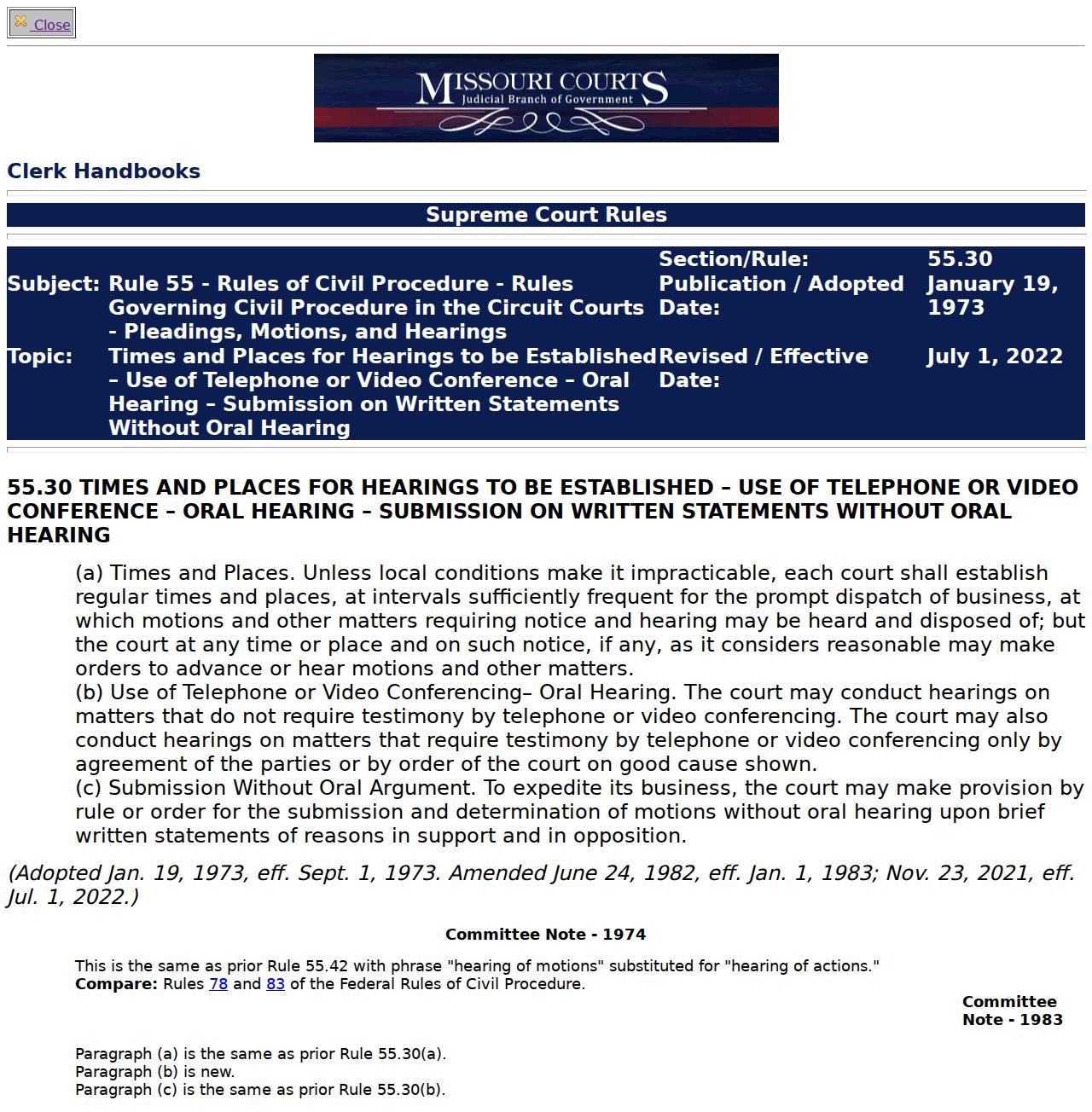
The assigned Rule 55.30 hearing guidance covers when and where hearings happen. It also covers telephone or video participation where permitted, and written disposition. It supplies statewide procedural context. It does not replace a particular Madison County notice, order, or current docket setting.
Take a short docket line like “motion sustained.” It names the outcome but not the basis. Pull the later order, or ask the Clerk for a public copy, rather than reading terms into the line that it does not state.
Civil Case Types on the Docket
Madison County civil dockets cover collections, contracts, torts, liens, judgments, small claims or limited civil matters, and other proceedings assigned to circuit or associate divisions. Probate and family cases run as separate court functions. The case type and division on the public header are your guides for routing any search or records request.
| Public case context | What the docket can show | Careful next step |
|---|---|---|
| Complaint or contract matter | Filing, service, pleadings, motions, settings, and judgment entries. | Use the case number and public header before requesting a document. |
| Small claims or limited civil | Assigned division, hearings, disposition, and later public events. | Confirm division with the Circuit Clerk rather than assuming jurisdiction from a dollar amount. |
| Probate or family | Possible public case information and procedural chronology. | Expect restrictions on protected attachments and identifying information. |
A Judgment Index Is Not the Complete File
Court Operating Rule 4.13 requires a civil judgment index. That index holds details such as the party against whom judgment was entered. Case number and date, court, amount, satisfaction or vacatur date, and a summary appear too. It is a strong tool for locating a judgment in a Madison County case lookup. It is not a stand-in for the underlying pleadings, the judgment text, the docket sheet, or later entries.
Need proof of judgment? Ask the Circuit Clerk for a certified Madison County judgment or another certified piece of the file. Ask separately about a later Madison County satisfaction, modification, balance, execution, or appeal entry. A recorded lien or a Recorder of Deeds entry can be a different record. It is held by a different office.
The official certified legal-file form lists possible record components: the docket sheet, the pleadings on which the action was tried, the judgment or order, post-judgment motions, post-judgment orders, and notice of appeal. Note that it is an appellate form, not a Madison County request form. Confirm the local request route and availability with the Clerk.
Civil Docket Settings and Hearings
A Madison County civil docket can list case-management, pretrial, mediation, settlement, motion, trial, or post-judgment settings. Treat those dates with care. A setting is not automatically the final trial date. A scheduled event is not proof it ever happened. Open the Madison County case docket itself to catch a continuance, a disposition, or a written order. Confirm anything urgent or conflicting with the Circuit Clerk.
Rule 55.30 lets the court set the time and place for proceedings. It also allows telephone or video participation where circumstances warrant. For the details of your specific Madison County case, the notice or order on file controls. One last caution: viewing a public document from home does not mean the hearing has a livestream.
Post-Judgment Entries Can Change the Picture
The judgment is not always the last word in a Madison County civil docket. Post-judgment motions, execution, garnishment, payment, satisfaction, and notice-of-appeal entries can land later, when public. So read an original amount or status line with a raised eyebrow. It is rarely a current balance. It seldom describes every obligation still outstanding.
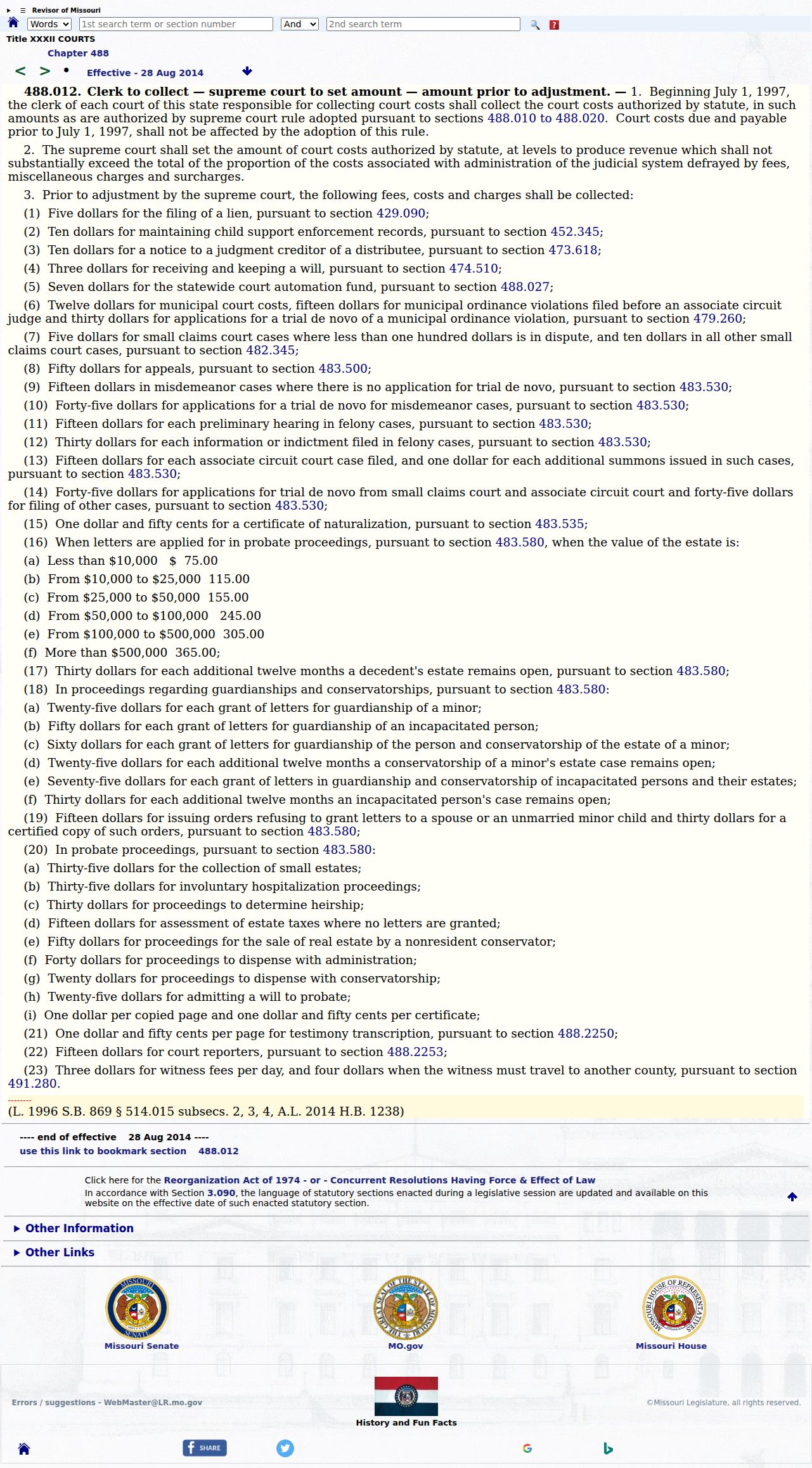
Fees follow state law, but local practice sets the real price. RSMo § 488.012 gives the courts their statutory authority over court costs and clerk fees. That statute shows what the state framework permits. The actual Madison County amount and copy practice still must be confirmed with the clerk.
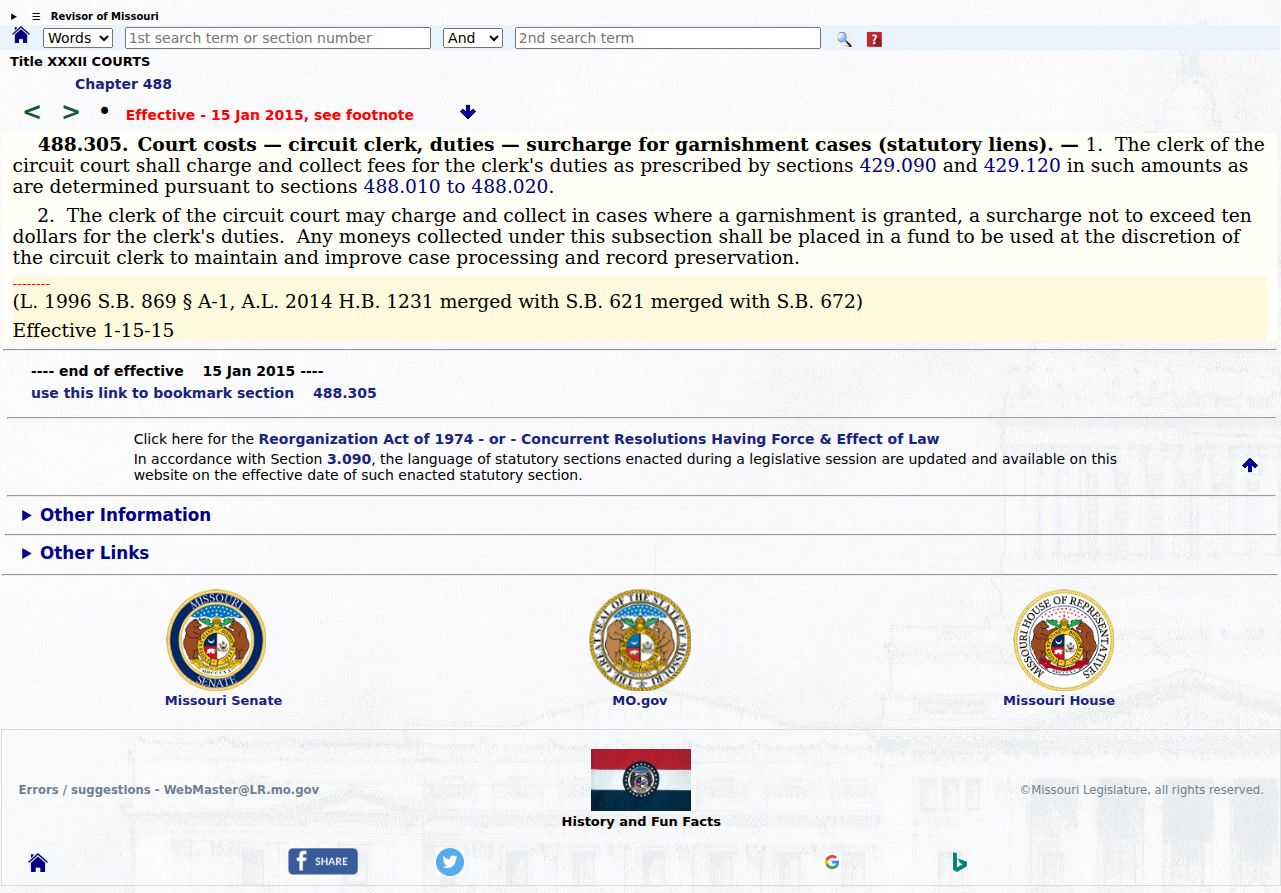
The separate circuit-clerk fee authority also includes a garnishment-surcharge provision.
Madison County's official pages publish no complete current fee schedule. Get an estimate first. That applies to copies, certification, mailing, and any special search the clerk performs for you.
Statewide fee and cost sources give helpful legal context. They are not proof of the current Madison County counter price. Spell out exactly what you want, an uncertified copy, a certified copy, a search, mailing, or a transcript, and ask whether advance payment is required before the work starts.
Civil Docket Access Rules
Missouri courts operate under a policy favoring open proceedings and open records. Still, access rules, court orders, and confidentiality statutes control what is actually available in Madison County. A public case shell does not make every attachment public. Financial statements, protected addresses, minors' information, medical records, and filing-information sheets can all be redacted or restricted.
Three channels serve different jobs. Case.net, the courthouse public terminal, and the Circuit Clerk's copy route each reach different corners of the file. An ECASE file may be electronically maintained. A public user may still need the courthouse terminal to view a document. The Madison County Case Lookup page walks through the search channels that can pin down the right public case. Use it before you make a record request.
When an attachment is restricted, use the procedural information on the public docket rather than the private substance. A redacted document, a dead document link, or a confidential-record marker does not mean no record exists. It means the access status, the governing rule, and any applicable order need a check with the custodian.
Older Madison Civil Files May Follow Another Route
Do not assume Case.net reaches every historical Madison County civil matter. Older files often follow a different path. The Missouri State Archives preserves judicial records through county and circuit collections, indexes, microfilm, and database projects. The County Records Database lets you search by county, office, record type, keyword, city, and year range, and the Judicial Records Database adds its own historic search fields.
Ask the Circuit Clerk whether an older Madison County file still sits locally or has moved. An Archives record may lack a modern Case.net identifier. And an index entry never proves every original document has been digitized.
Old-file research works best when you combine the parties, an approximate year, the county, the court type, and the cause or subject. Keep any Archive reference or microfilm details you find. Then ask the custodian which format can be copied or viewed, because a historic court file may be paper, microfilm, or electronic rather than available from home.